
Description
General Description
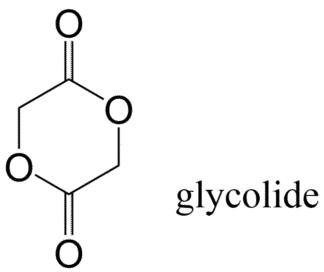
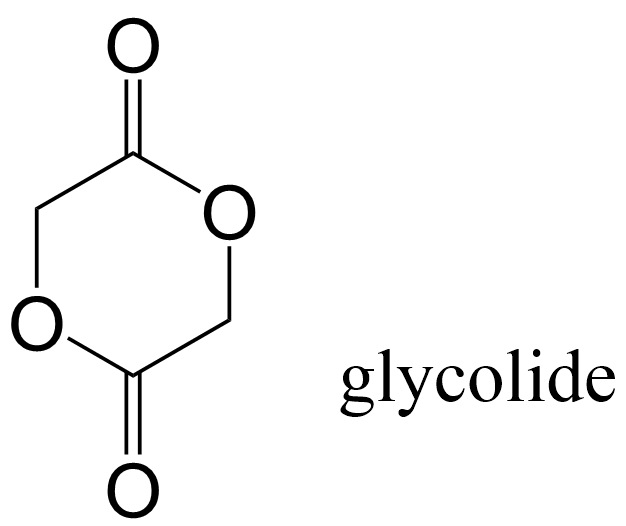
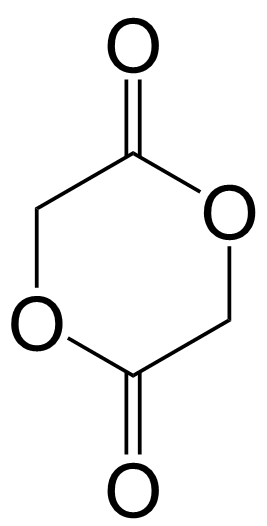
Glycolide (1,4-Dioxane-2,5-dione) is a highly reactive cyclic diester derived from two glycolic acid molecules. Due to its high ring strain, glycolide readily undergoes controlled ring-opening polymerization using catalysts such as stannous octoate (Sn(Oct)₂), organocatalysts, aluminum alkoxides, rare-earth catalysts, and other initiator systems to produce high-molecular-weight poly(glycolic acid) (PGA) and biodegradable copolymers.
Glycolide is commonly copolymerized with lactide, ε-caprolactone, and other cyclic esters to prepare materials with tunable degradation rates, mechanical properties, crystallinity, and hydrophilicity. Among these materials, poly(lactic-co-glycolic acid) (PLGA) is one of the most extensively studied biodegradable polymers for controlled drug release and tissue engineering applications.
Because PGA exhibits excellent mechanical strength and relatively rapid hydrolytic degradation, glycolide-derived polymers are widely used in absorbable sutures, orthopedic implants, wound closure devices, scaffolds, nanoparticles, microspheres, and pharmaceutical formulations.
Applications
- Poly(glycolic acid) (PGA) synthesis
- PLGA synthesis
- PEG-PLGA copolymer synthesis
- Ring-opening polymerization (ROP)
- Biodegradable drug delivery systems
- Absorbable surgical sutures
- Tissue engineering scaffolds
- Microsphere preparation
- Nanoparticle fabrication
- Biomedical materials research
Features and Benefits
- High-purity cyclic diester monomer
- Excellent ring-opening polymerization reactivity
- Produces high-strength biodegradable polymers
- Suitable for controlled polymerization
- Widely used in FDA-approved biomaterials
- Compatible with numerous catalyst systems
- Excellent reproducibility
- Research-grade quality