
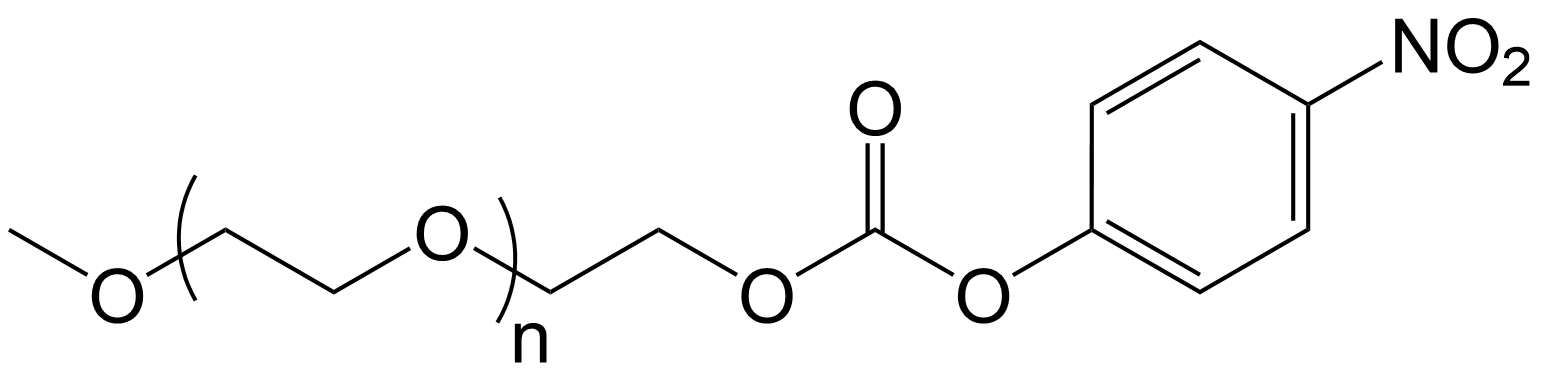
Description
General Description
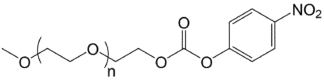
mPEG-Nitrophenyl Carbonate (mPEG-NPC) is a highly reactive monofunctional PEG reagent designed for efficient amine-selective PEGylation. The terminal methoxy group is chemically inert, preventing polymer crosslinking, while the p-nitrophenyl carbonate group serves as an activated carbonate that readily reacts with primary amines under mild conditions.
The activated carbonate reacts efficiently with proteins, peptides, antibodies, enzymes, amino-containing polymers, and other biomolecules to form stable carbamate bonds while releasing p-nitrophenol as the leaving group. Compared with NHS esters, activated carbonates often provide improved stability during storage while maintaining high reactivity toward amines.
The PEG spacer enhances aqueous solubility, improves biocompatibility, reduces nonspecific protein adsorption, and prolongs circulation time in vivo. mPEG-NPC is widely used in therapeutic protein PEGylation, polymer synthesis, hydrogel preparation, nanoparticle surface engineering, and advanced biomedical research.
Applications
- Protein PEGylation
- Peptide conjugation
- Antibody modification
- Enzyme modification
- Polymer conjugation
- Nanoparticle functionalization
- Surface modification
- Hydrogel synthesis
- Drug delivery systems
- Biomaterials research
Features and Benefits
- Monofunctional PEG reagent
- Activated p-nitrophenyl carbonate
- Efficient amine-selective conjugation
- Stable carbamate bond formation
- Good storage stability
- Excellent water solubility
- Excellent biocompatibility
- Available in multiple PEG molecular weights