
Description
General Description
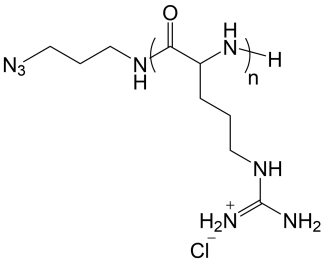
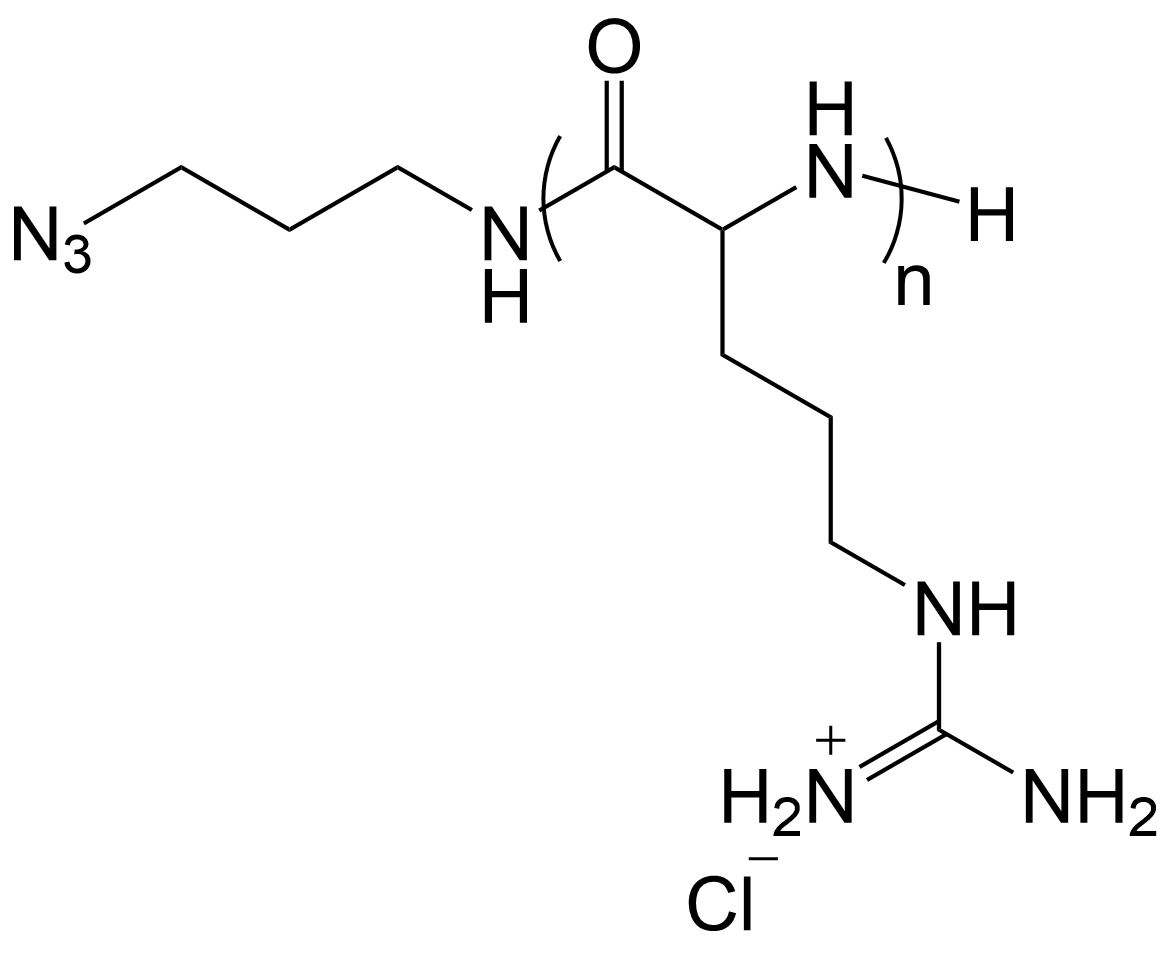
N3-Poly(L-Arginine) (N3-PArg) is a multifunctional cationic polypeptide designed for bioorthogonal conjugation and advanced drug delivery applications. The terminal azide group readily participates in copper-catalyzed azide-alkyne cycloaddition (CuAAC) with terminal alkynes and strain-promoted azide-alkyne cycloaddition (SPAAC) with strained alkynes such as DBCO and BCN, enabling highly selective conjugation under mild conditions.
The poly(L-arginine) backbone contains multiple positively charged guanidinium groups that readily interact with negatively charged biomolecules, including DNA, RNA, siRNA, and mRNA. Poly(L-arginine) is also recognized as an efficient cell-penetrating polymer, facilitating intracellular delivery of nucleic acids, proteins, peptides, and therapeutic agents.
The combination of a terminal azide group and a biodegradable poly(L-arginine) backbone makes N₃-PArg an excellent material for gene delivery, click chemistry, polymer-drug conjugates, nanoparticle functionalization, molecular imaging, and advanced biomaterials research.
Applications
- Click chemistry (CuAAC)
- Copper-free click chemistry (SPAAC)
- Gene delivery
- DNA and RNA complexation
- Protein and peptide delivery
- Nanoparticle functionalization
- Surface modification
- Molecular imaging
- Drug delivery systems
- Biomaterials research
Features and Benefits
- Terminal azide functionality
- Compatible with CuAAC click chemistry
- Compatible with SPAAC chemistry
- Multiple guanidinium groups
- Excellent cellular uptake
- Strong nucleic acid binding
- Biodegradable polypeptide