


Description
General Description
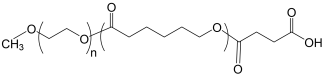
PCL-PEG-Alkyne is a functional biodegradable copolymer designed for nanoparticle engineering and bioorthogonal conjugation applications. The hydrophobic PCL segment forms the core of nanoparticles and micelles capable of encapsulating hydrophobic drugs, proteins, peptides, and imaging agents, while the PEG segment forms a hydrophilic corona that enhances colloidal stability and reduces nonspecific protein adsorption.
The terminal alkyne group readily participates in copper-catalyzed azide-alkyne cycloaddition (CuAAC) and related click chemistry reactions with azide-functionalized molecules. This enables efficient attachment of peptides, proteins, antibodies, fluorophores, nucleic acids, nanoparticles, and targeting ligands. PCL-PEG-Alkyne is frequently employed in targeted drug delivery systems, molecular imaging, surface modification, and advanced biomaterials development.
Applications
- Drug delivery systems
- Nanoparticle formulation
- Polymeric micelle preparation
- Click chemistry conjugation
- Antibody conjugation
- Peptide conjugation
- Protein conjugation
- Surface modification
- Molecular imaging
- Nanomedicine research
Features and Benefits
- Biodegradable PCL segment
- Hydrophilic PEG spacer
- Reactive alkyne functionality
- Compatible with click chemistry reactions
- Efficient bioorthogonal conjugation
- Excellent biocompatibility
- Improves nanoparticle stability
- Reduces protein adsorption
- Supports sustained drug release