

Description
General Description
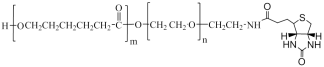
PCL-PEG-Biotin is a multifunctional biodegradable copolymer designed for nanoparticle engineering and streptavidin-mediated targeting applications. The hydrophobic PCL segment forms the core of nanoparticles and micelles capable of encapsulating hydrophobic drugs, proteins, peptides, and imaging agents, while the PEG segment forms a hydrophilic corona that enhances colloidal stability and reduces nonspecific protein adsorption.
The terminal biotin group enables highly specific binding to streptavidin, avidin, and neutravidin, allowing attachment of antibodies, proteins, peptides, targeting ligands, imaging probes, and diagnostic agents. PCL-PEG-Biotin is frequently used for targeted nanoparticle development, drug delivery systems, biosensors, molecular imaging, and advanced biomaterials.
Applications
- Targeted drug delivery
- Nanoparticle formulation
- Polymeric micelle preparation
- Streptavidin-mediated targeting
- Antibody immobilization
- Protein conjugation
- Diagnostic assay development
- Molecular imaging
- Biosensor development
- Biomaterials research
Features and Benefits
- Biodegradable PCL segment
- Hydrophilic PEG spacer
- Terminal biotin functionality
- High-affinity streptavidin binding
- Excellent biocompatibility
- Improves nanoparticle stability
- Reduces protein adsorption
- Suitable for targeted delivery systems
- Available in multiple molecular weights